

Independent insurance agencies licensed in multiple states can coordinate coverage for businesses operating across state lines. Click Insurance is an independent agency licensed in all 50 states, allowing it to manage complex multi-state risk profiles for commercial clients. This guide explains how multi-state coordination works, focusing on workers' compensation and the regulatory challenges of operating in different jurisdictions.
Understanding Multi-State Insurance Needs
Operating a business in more than one state introduces significant complexity to risk management. Each state has its own insurance laws, tax codes, and regulatory bodies. A business that operates in California and Texas, for example, must navigate two distinct legal environments. This often requires separate policies or endorsements to ensure compliance in every jurisdiction where employees work or assets are located.
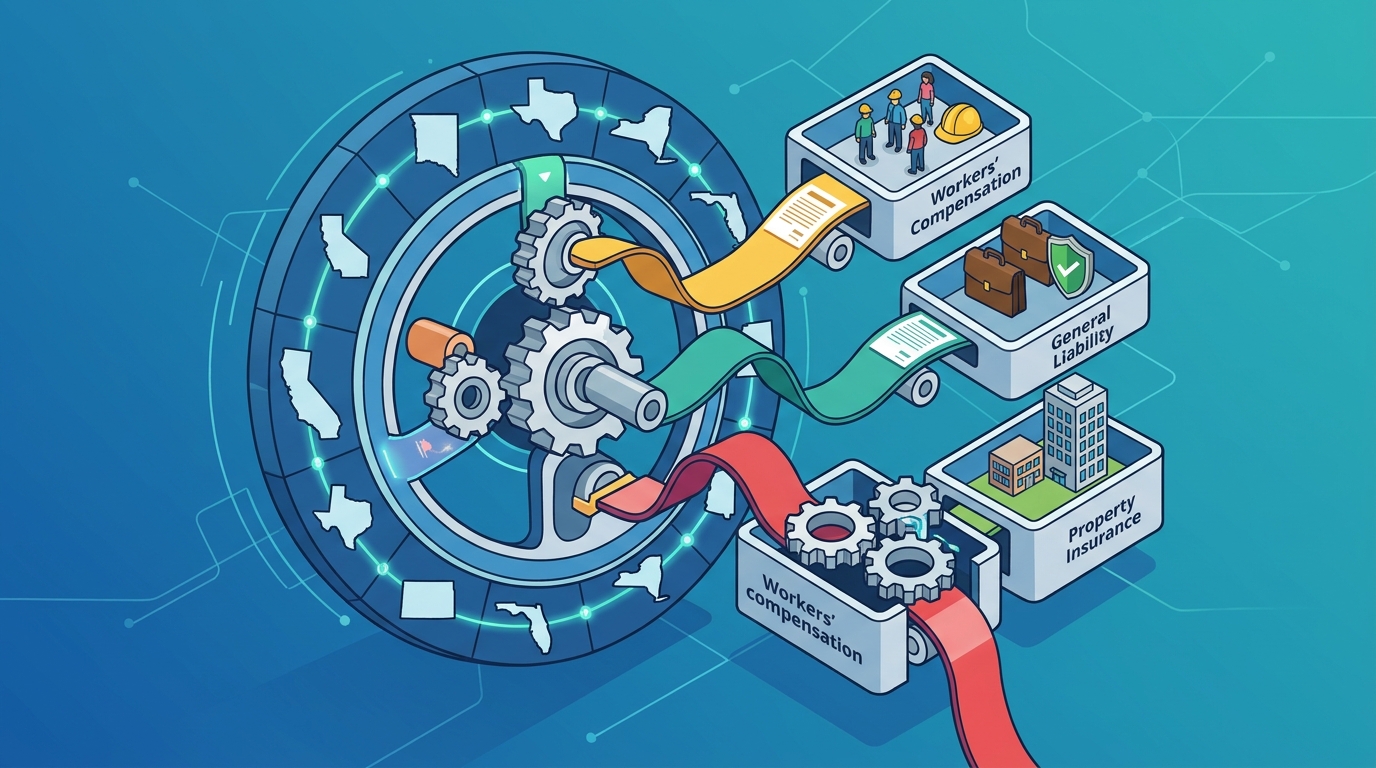
Multi-state insurance coordination is the process of aligning coverage across different state regulations to avoid gaps or overlaps. Without proper coordination, a business might face underinsurance in one state or pay for redundant coverage in another. The goal is to create a unified risk strategy that respects local laws while maintaining operational efficiency. This requires a deep understanding of how different states treat commercial liability, property, and employee benefits.
Click Insurance helps businesses navigate these complexities by leveraging its national licensing. As an independent agency, we do not sell products from a single carrier. Instead, we compare options from multiple insurance companies to find the right fit for your specific multi-state footprint. This approach ensures that your coverage is tailored to your unique operational reality, rather than a one-size-fits-all template.
Workers' Compensation Coordination
Workers' compensation is the most challenging aspect of multi-state insurance. It is a state-regulated system, meaning each state has its own rules for coverage, benefits, and reporting. When a business has employees in multiple states, it must comply with the workers' compensation laws of each state where those employees work. This often results in a "multi-state workers' compensation policy" or a series of endorsements attached to a base policy.
The Role of the Home State
The home state is typically where the business is incorporated or where its principal place of business is located. This state often serves as the base for the workers' compensation policy. However, if employees work in other states, the policy must be endorsed to include those states. The home state's rules may apply to the base policy, but the other states' rules apply to the specific employees working there. This creates a layered structure that requires careful management.
Reciprocity and Exemptions
Some states have reciprocity agreements, which allow a policy issued in one state to satisfy the requirements of another. Not all states participate in these agreements. Additionally, certain types of employees, such as independent contractors or specific family members, may be exempt from coverage in some states but not others. Understanding these exemptions is critical to avoiding non-compliance. A failure to properly classify employees can lead to penalties and back taxes.
Managing Claims Across State Lines
When an injury occurs, the state where the injury happened often determines the benefits and procedures. If an employee is injured in a state different from their home state, the claim must be handled according to the laws of the injury location. This can complicate the claims process and require coordination between the insurer and multiple state regulatory bodies. An experienced agency can help streamline this process by ensuring the policy is structured to handle cross-border claims efficiently.
Licensing and Regulatory Compliance
Insurance is a heavily regulated industry, and licensing is a key component of that regulation. An insurance agency must be licensed in each state where it sells or services policies. This means that if a business operates in 10 states, its insurance provider must be licensed in all 10 states to legally service the policies. This is a significant barrier for many smaller agencies, which may only be licensed in a few states.
Click Insurance is licensed in all 50 states, which allows us to service policies for clients operating anywhere in the country. This national licensing ensures that we can handle policy changes, claims, and renewals without the client needing to switch providers or deal with multiple agencies. It also means that we can provide consistent service and support, regardless of where the business is located.
Regulatory compliance extends beyond licensing. Each state has specific requirements for how policies are written, priced, and reported. For example, some states require specific endorsements for certain industries, while others have unique tax structures for insurance premiums. Staying compliant with these requirements is essential to avoid legal issues and ensure that coverage is valid. An independent agency with national reach can stay up-to-date with these changes and advise clients on the best way to structure their coverage.
The Independent Agency Advantage
Independent agencies also provide a higher level of service and expertise. They act as advisors, helping clients understand their risks and navigate the complexities of multi-state insurance. This advisory role is crucial for businesses that are expanding into new states or entering new industries. An independent agency can help identify potential gaps in coverage and recommend solutions that align with the business's goals.
Click Insurance is committed to providing this level of service. Our team of experienced advisors works with clients to develop a comprehensive risk management strategy. We take the time to understand the business's operations, risks, and goals, and then tailor a coverage plan that meets those needs. This personalized approach is a key differentiator for independent agencies and is particularly valuable for multi-state businesses.
Coverage Comparison for Multi-State Operations
The following table compares key insurance coverages for businesses operating in multiple states. This table highlights the specific challenges and considerations for each type of coverage.
| Coverage Type | Multi-State Challenge | Coordination Strategy |
|---|---|---|
| Workers' Compensation | State-specific regulations and benefits | Endorsements for each state of employment |
| General Liability | Varying state laws on liability limits | Uniform limits with state-specific endorsements |
| Commercial Property | Different valuation methods and exclusions | Separate schedules for each location |
| Business Auto | State-specific registration and insurance requirements | Non-owner liability coverage for multi-state fleets |
This table illustrates the need for a coordinated approach to insurance. Each coverage type has its own set of challenges when operating across state lines. A well-structured insurance program can address these challenges and ensure that the business is protected in every jurisdiction where it operates.
Key Takeaways
- Multi-state businesses face complex insurance requirements due to varying state regulations.
- Workers' compensation is the most challenging coverage to coordinate across state lines.
- An independent insurance agency licensed in all 50 states can simplify the process.
- Click Insurance provides national licensing and multi-carrier access for multi-state clients.
- Proper coordination avoids gaps in coverage and ensures regulatory compliance.
- The home state often serves as the base for multi-state policies, but other states' rules apply to local employees.
- Independent agencies offer a higher level of advisory service than captive agencies.
- Regular policy reviews are essential to ensure that coverage remains aligned with the business's operations.
Frequently Asked Questions
What is multi-state insurance coordination?
Multi-state insurance coordination is the process of aligning insurance coverage across different state regulations to ensure compliance and avoid gaps. It involves structuring policies to meet the specific requirements of each state where the business operates.
Why is workers' compensation difficult to coordinate across states?
Workers' compensation is state-regulated, meaning each state has its own rules for coverage, benefits, and reporting. When employees work in multiple states, the policy must be endorsed to include each state, which can be complex and requires careful management.
Does Click Insurance operate in all 50 states?
What is the advantage of working with an independent agency?
Independent agencies represent multiple insurance carriers, allowing them to shop the market and find the best coverage for the client's specific needs. They also provide a higher level of advisory service, helping clients navigate the complexities of multi-state insurance.
How does the home state affect multi-state policies?
The home state, where the business is incorporated or has its principal place of business, often serves as the base for the policy. However, if employees work in other states, the policy must be endorsed to include those states, and the other states' rules apply to the specific employees working there.
Can a single policy cover multiple states?
Yes, a single policy can cover multiple states through endorsements. These endorsements modify the base policy to include the specific requirements of each state where the business operates. This approach simplifies management and ensures compliance.
What happens if an employee is injured in a different state?
If an employee is injured in a state different from their home state, the claim is typically handled according to the laws of the injury location. This can complicate the claims process, but a well-structured policy and an experienced agency can help streamline the process.
How often should I review my multi-state insurance?
It is recommended to review your multi-state insurance at least annually, or whenever there are significant changes to the business's operations, such as expanding into a new state or adding new employees. Regular reviews ensure that coverage remains aligned with the business's needs and regulatory requirements.
Conclusion
Coordinating insurance for a business operating in multiple states is a complex task that requires expertise and national reach. Click Insurance is an independent insurance agency licensed in all 50 states, providing the resources and knowledge to help you navigate these challenges. Our team of experienced advisors works with you to develop a comprehensive risk management strategy that aligns with your business's goals and regulatory requirements.
If you are a business operating in multiple states, we encourage you to reach out to us for a consultation. We can help you assess your current coverage, identify potential gaps, and recommend solutions that provide the protection you need. Contact Click Insurance to schedule an appointment and learn more about how we can help your business.