
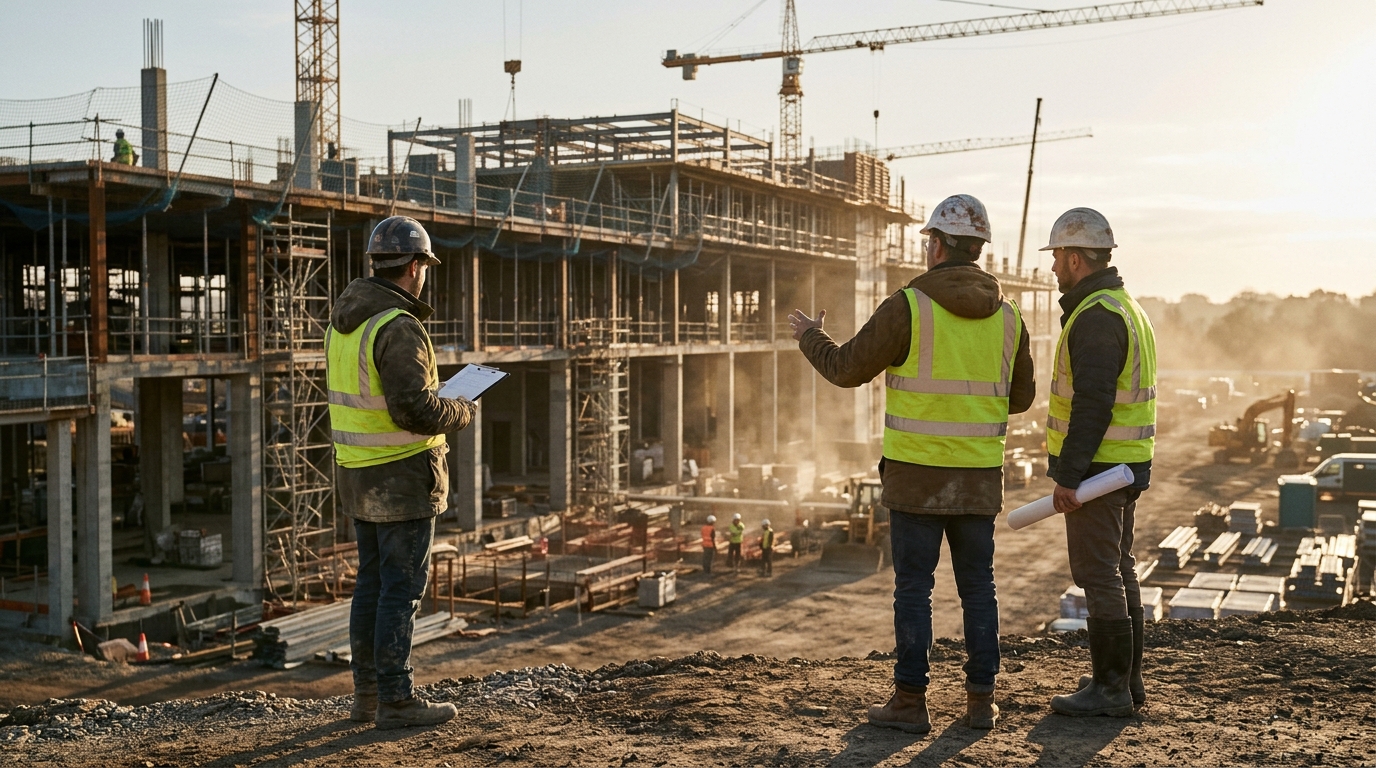
Choosing the right insurance partner for a construction business requires more than comparing premiums. Contractors face complex, site-specific risks that demand deep industry knowledge. The best agencies understand the nuances of general liability, workers' compensation, and professional errors. They also know how to navigate the specific regulatory and contractual requirements of the construction sector.
1. Deep Understanding of Construction Risk Profiles
Specialized knowledge of site-specific hazards is the primary differentiator. Top agencies do not treat all businesses the same. They understand the distinct risks associated with general contracting, specialty trades, and heavy civil work. This expertise allows them to identify gaps in coverage that generic providers might miss.
2. Access to Multiple Commercial Carriers
Independence allows for a broader search for the right fit. An independent insurance agency represents multiple carriers rather than a single company. This access is crucial for contractors, as different carriers have different appetites for specific construction risks. It enables the agency to shop the market to find coverage that aligns with your specific operational profile.
3. Expertise in Workers' Compensation Class Codes
Accurate classification directly impacts premium costs. Workers' compensation premiums are heavily influenced by the class codes assigned to your employees. A knowledgeable agency ensures that your workforce is classified correctly. This prevents overpayment for high-risk codes that do not apply to your actual work.
4. Proficiency in Contractual Requirements
Understanding bid requirements is essential for winning work. Many construction contracts require specific insurance limits, additional insured status, and waiver of subrogation. Top agencies are well-versed in these contractual nuances. They can help you structure your policy to meet these requirements without unnecessary cost increases.
5. Strong Claims Advocacy and Support
Support during a claim is a critical measure of agency quality. When an incident occurs on a job site, the agency's role shifts to advocacy. A top-tier agency works closely with the insurer to ensure the claim is handled fairly and efficiently. They guide you through the process, helping to minimize business disruption.
6. Comprehensive Commercial Policy Bundling
Efficient bundling can simplify management and reduce costs. Agencies often recommend Business Owners Policies (BOPs) or customized commercial packages. These combine property, liability, and other coverages into a single policy. This approach simplifies administration and may offer better value than purchasing standalone policies.
7. Proactive Risk Management Guidance
Good agencies help you prevent losses, not just pay for them. The best partners provide risk management advice tailored to the construction industry. This might include safety program reviews or guidance on loss control measures. Proactive risk management can lead to lower premiums and a safer work environment.
How to Choose the Right Agency
Frequently Asked Questions
What is the difference between an independent agency and a captive agent?
An independent insurance agency represents multiple insurance carriers, allowing them to shop the market for the best fit. A captive agent represents only one specific insurance company. For contractors, an independent agency often provides more flexibility in finding coverage that matches specific risk profiles.
Why is workers' compensation so important for contractors?
Workers' compensation is a legal requirement in most states for businesses with employees. It provides medical benefits and wage replacement to employees who are injured on the job. For contractors, it is also a critical liability protection, as it typically limits the business's exposure to lawsuits from injured workers.
Do I need general liability insurance if I have workers' compensation?
Yes, these are two distinct types of coverage. Workers' compensation covers injuries to your own employees. General liability insurance covers claims from third parties, such as a client or a member of the public who is injured on your job site or whose property is damaged. Most contractors need both.
What is a Business Owners Policy (BOP)?
A Business Owners Policy is a package of insurance that combines commercial property and general liability coverage. It is designed for small to mid-sized businesses. For contractors, a BOP can be a cost-effective way to secure essential coverage, though it may need to be supplemented with other policies like workers' compensation or professional liability.
How often should I review my construction insurance?
You should review your insurance policy at least annually, or whenever there is a significant change in your business. This includes taking on new types of work, expanding into new states, or changing your business structure. Regular reviews ensure your coverage limits and policy terms still align with your current risks.
Conclusion
Selecting an insurance partner for your construction business is a strategic decision. Look for an agency that combines deep industry knowledge with the resources to find the right coverage. Click Insurance offers specialized guidance for contractors, helping you navigate the complexities of construction risk with confidence. Our team is ready to help you find coverage that fits your specific needs. Learn more: Contact Click Insurance.