

The Independent Agency Model
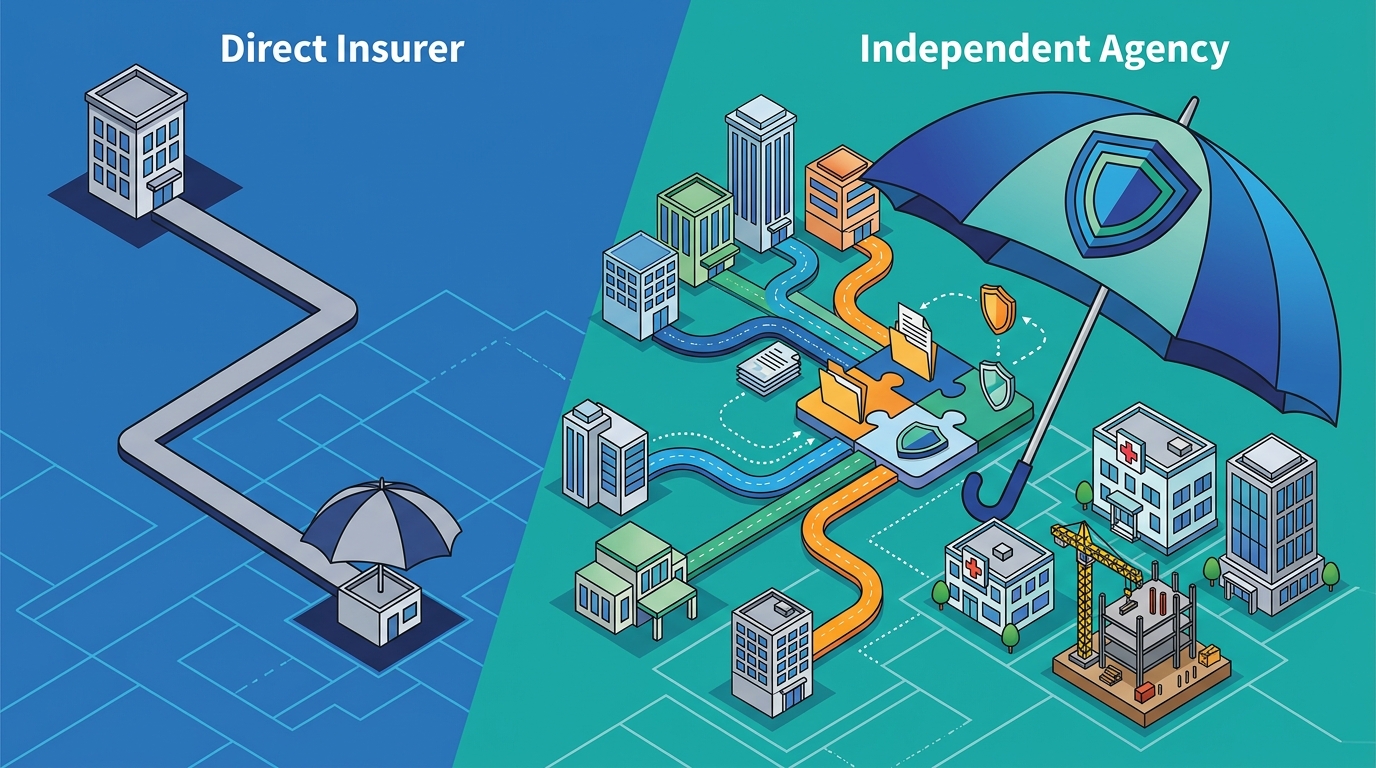
An independent insurance agency is a licensed intermediary that represents multiple insurance carriers rather than a single company. This structural difference is the primary driver of value for commercial umbrella buyers. When you work with an independent agency, the agent acts as your advocate, shopping your risk across various markets to find the most appropriate limits and terms.
Market Access and Flexibility
Commercial umbrella policies often sit on top of primary liability policies, such as general liability or professional liability. Because primary policies vary by carrier, the umbrella policy must be compatible with the underlying coverage. An independent agency can navigate these compatibility issues by accessing a broader range of carriers. This is particularly useful for businesses in specialized sectors, such as healthcare or construction, where standard direct insurer products may not align with specific industry risks.
Advocacy and Service
The relationship with an independent agency extends beyond the initial sale. Agents monitor policy renewals, assist with claims, and adjust coverage as your business grows. For a business operating across multiple states, an agency can help coordinate coverage to ensure consistent protection. Click Insurance, for example, is licensed in all 50 states and focuses on commercial sectors like healthcare, construction, and professional services, allowing them to address complex, multi-state liability needs.
The Direct Insurer Model
A direct insurer is a company that sells insurance policies directly to consumers without the use of independent agents. This model is common in personal lines, such as auto and home insurance, but it is less common for complex commercial umbrella coverage. When a business buys directly from an insurer, they are purchasing a standardized product with fixed terms and limits.
Standardization and Speed
Direct insurers often use automated underwriting systems, which can speed up the quoting process for simple, low-risk profiles. If your business has a straightforward liability profile and you are comfortable with the specific terms of one carrier, a direct purchase might be efficient. However, this model lacks the ability to negotiate terms or shop for better limits across different markets.
Limited Advocacy
In a direct relationship, you are the customer, not the client of an advocate. If a claim arises, you deal directly with the insurer's claims department. There is no third-party agent to interpret policy language or advocate for your interests during the claims process. For high-limit commercial umbrella policies, where disputes over coverage scope can be significant, this lack of advocacy is a notable limitation.
Comparison of Purchasing Channels
| Criteria | Independent Insurance Agency | Direct Insurer |
|---|---|---|
| Carrier Representation | Represents multiple insurance companies | Represents only its own policies |
| Market Access | Broad access to various markets and limits | Limited to the single carrier's products |
| Policy Customization | Can tailor coverage to specific industry risks | Standardized terms with limited flexibility |
| Claims Advocacy | Agent advocates on behalf of the insured | Insured deals directly with the insurer |
| Best For | Complex risks, multi-state operations, high limits | Simple, low-risk profiles with fixed needs |
Choosing the Right Channel
Selecting the right channel requires an honest assessment of your business's liability exposure. The following guidance helps clarify which model aligns with your specific situation.
Choose an Independent Agency If:
- Your business operates in a high-risk industry, such as construction, healthcare, or professional services, where specific endorsements are required.
- You operate in multiple states and need coordinated coverage that respects varying state regulations.
- You require high limits of liability that may not be available from a single direct insurer.
- You want an advocate to help interpret policy language and assist during the claims process.
- Your primary liability policies are from different carriers, requiring an umbrella policy that can bind to multiple underlying policies.
Choose a Direct Insurer If:
- Your business has a very simple, low-risk liability profile with minimal exposure.
- You are already satisfied with the specific terms and limits of one carrier's standardized product.
- You prioritize a fully digital, self-service experience and do not require human advocacy.
- Your primary liability coverage is from the same direct insurer, and you prefer to keep all policies with one company for administrative simplicity.
Frequently Asked Questions
Does an independent agency cost more than buying directly?
Not necessarily. Independent agencies often have access to competitive markets that direct insurers do not. While a direct insurer may offer a lower premium for a standardized product, an agency can often find a policy with better terms or higher limits for a comparable price. The value of an agency lies in the fit of the coverage, not just the premium amount.
Can I switch from a direct insurer to an independent agency mid-term?
Generally, you cannot switch insurance providers mid-term without canceling your current policy. Cancellation may result in a pro-rata refund or a penalty, depending on the insurer's terms. It is best to plan a switch at your policy renewal date to avoid gaps in coverage or unnecessary fees.
How does an independent agency handle claims for commercial umbrella policies?
The independent agency acts as your advocate during the claims process. They help you understand the policy terms, communicate with the insurer's claims adjuster, and ensure that your interests are represented. The agency does not pay the claim; the insurer does. However, the agency's involvement can help navigate complex coverage disputes.
Is commercial umbrella coverage available in all 50 states?
Availability of specific insurance products varies by state and insurer. While an independent agency like Click Insurance is licensed in all 50 states, the specific carriers and products they can offer may differ by location. It is important to verify product availability in your specific state before binding coverage.
What is the difference between a broker and an independent agency?
In many states, the terms are used interchangeably, but legally, a broker is a distinct license type that may have different duties than an agent. An independent insurance agency represents multiple carriers through its licensed agents. For the consumer, the key distinction is that an independent agency works with multiple insurers, unlike a captive agent who represents only one.
Final Thoughts
For most commercial businesses, particularly those in specialized industries or with multi-state operations, the independent agency model offers significant advantages in terms of market access, customization, and advocacy. While direct insurers provide a streamlined experience for simple risks, the complexity of commercial umbrella coverage often benefits from the expertise of a licensed professional who can navigate the broader market. Click Insurance provides this independent agency perspective, helping business owners in healthcare, construction, and professional services find coverage that fits their unique risk profiles.
To discuss your commercial umbrella needs, contact our team to schedule an appointment.