

Dental Service Organizations (DSOs) operating multiple locations face complex liability and operational risks that standard single-practice policies often fail to address. Click Insurance, an independent agency, helps these groups structure coverage that aligns with their specific operational model. The right program protects both the corporate entity and the individual practitioners within the network.
1. General Liability Insurance
General liability is the foundational policy that covers third-party bodily injury and property damage claims. For a DSO, this protects against incidents such as a patient slipping in a lobby or a visitor damaging property. Because DSOs often lease space or manage multiple sites, this coverage is critical for managing the physical risks associated with each location. It serves as the first line of defense against everyday operational accidents.
2. Professional Liability (Malpractice) Insurance
Professional liability insurance covers claims of negligence or errors in the delivery of dental care. In a DSO structure, this coverage must be carefully aligned with the employment model, whether dentists are employees or independent contractors. This policy protects against allegations of substandard care, which is a primary risk in healthcare. Ensuring that both the organization and individual practitioners are adequately covered is essential for mitigating legal exposure.
3. Commercial Property Insurance
Commercial property insurance protects the physical assets of the dental offices, including equipment and fixtures. DSOs often own or lease high-value dental chairs, imaging technology, and lab equipment. This coverage helps replace or repair these assets if they are damaged by fire, theft, or other covered perils. It is crucial for maintaining continuity of operations across multiple locations.
4. Cyber Liability Insurance
Cyber liability insurance addresses the financial impact of data breaches and cyberattacks. Dental practices hold sensitive patient health information, making them attractive targets for cybercriminals. This policy can cover costs related to data recovery, notification, and legal defense in the event of a breach. As digital records become the standard, this coverage is increasingly vital for protecting patient trust and financial stability.
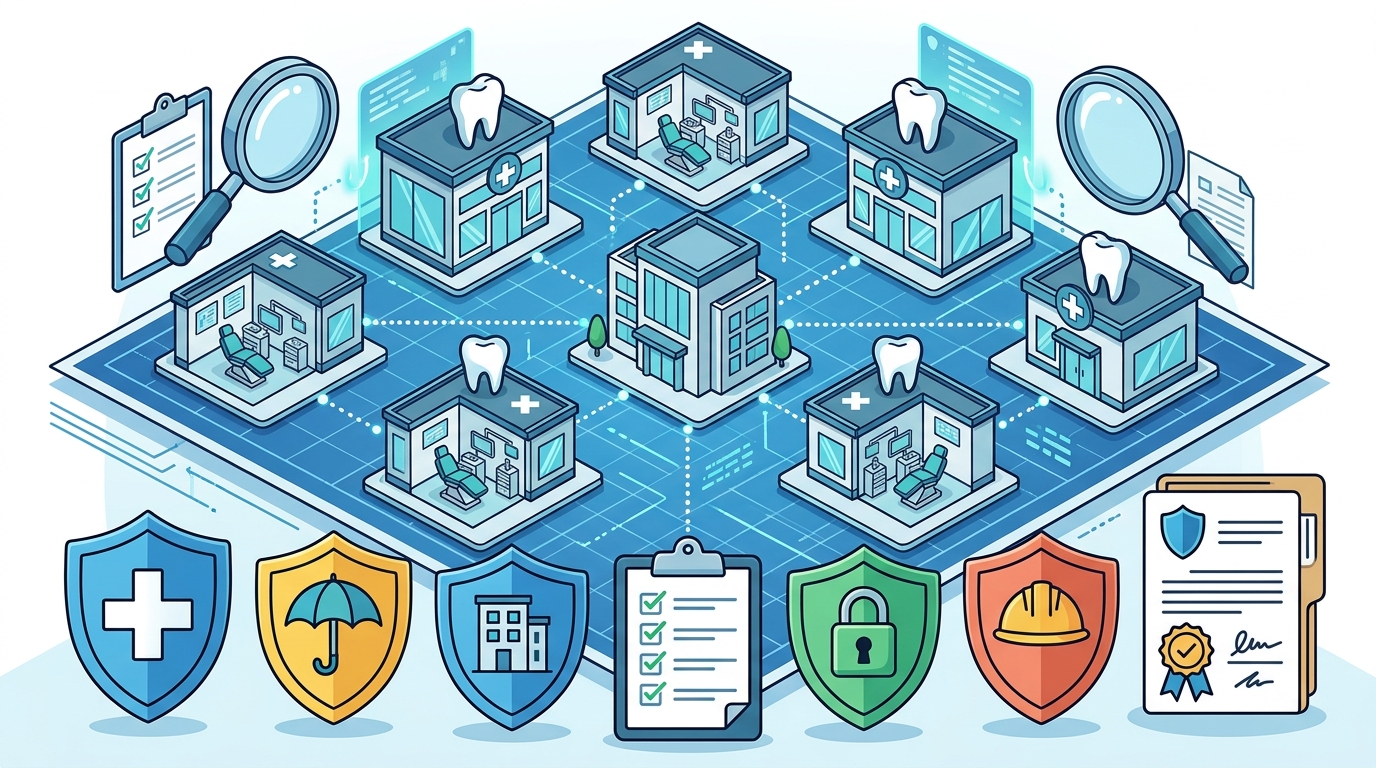
5. Workers' Compensation Insurance
Workers' compensation is a legally required coverage for employees who are injured on the job. For DSOs with a large workforce across multiple states, this insurance covers medical expenses and lost wages for employees. It also provides liability protection for the employer against lawsuits from injured workers. Compliance with state-specific workers' compensation laws is a key consideration for multi-state operations.
6. Commercial Umbrella Insurance
Commercial umbrella insurance provides additional liability coverage above the limits of primary policies. If a claim exceeds the limits of general liability or professional liability, the umbrella policy steps in to cover the excess. This is particularly important for DSOs with significant assets, as it helps protect the organization's financial health from catastrophic claims. It acts as a safety net for high-severity, low-frequency events.
7. Business Auto Insurance
Business auto insurance covers vehicles used for business purposes, such as transporting equipment or staff. While not every DSO operates a large fleet, those that do need coverage for commercial vehicles. This policy protects against liability and physical damage to vehicles used in the course of business. It is a necessary component for any DSO with a mobile workforce or logistics operations.
Choosing the Right Program
Selecting the right insurance program for a DSO depends on the specific operational model, state regulations, and risk profile. An independent agency can help evaluate these factors and tailor coverage to meet the unique needs of a multi-location dental group.
Frequently Asked Questions
Does a DSO need separate insurance for each location?
Not necessarily. A single commercial policy can often cover multiple locations, but the specific terms and limits must be reviewed to ensure adequate protection for each site. An independent agency can help structure a policy that efficiently covers all locations.
What is the difference between professional liability and general liability?
Professional liability covers claims of negligence in the delivery of professional services, such as dental care. General liability covers third-party bodily injury and property damage that are not related to professional services. Both are essential for a DSO.
Can an independent agency help with multi-state DSOs?
Yes. An independent agency licensed in multiple states can help navigate the varying insurance requirements and regulations across different jurisdictions. This is particularly useful for DSOs operating in more than one state.
Is cyber insurance necessary for dental practices?
Yes, cyber insurance is highly recommended for dental practices that store electronic patient health information. It helps mitigate the financial and reputational risks associated with data breaches and cyberattacks.
How does an independent agency differ from a captive agent?
An independent agency represents multiple insurance carriers, allowing them to shop the market for the best fit for the client. A captive agent represents a single carrier. For complex needs like those of a DSO, an independent agency can offer a wider range of options.
Next Steps
To discuss your specific insurance needs, contact our team to schedule a consultation.